
Introduction
You may already know that press coverage builds credibility. However, most startup founders do not realize how PR drives GEO is now one of the most important growth levers available to brands in 2026.

Every press feature you earn can directly influence whether AI engines like ChatGPT, Perplexity, and Google AI Overviews cite your brand in their answers.
Generative Engine Optimization, or GEO, is the process of optimizing your brand so AI tools reference it when users ask relevant questions.
It is the next frontier in digital visibility. However, unlike traditional SEO, GEO cannot be bought with an ad budget.
It must be earned, and that is exactly where public relations comes in.
Inbound links from high-authority domains remain one of the strongest signals that influence AI-generated content sourcing.
When your brand earns coverage on Forbes, Bloomberg, or Business Insider, those articles create powerful authority signals that AI engines pick up and act on.
This article breaks down the exact connection between PR and GEO, explains why earned media is the most reliable way to build AI search visibility, and gives you a clear framework for making it work for your brand.
How PR Drives GEO Through Earned Media and AI Visibility: Table of contents
How PR Drives GEO
To understand how PR drives GEO, you first need to understand how AI engines decide what to cite. These tools do not generate answers out of thin air.
They pull from sources they trust. The criteria for trust include domain authority, citation history, topical relevance, and freshness of content.
This is where PR becomes indispensable. When a PR agency secures a feature for your brand in Forbes or Business Insider, several things happen at once:
- A high-authority page is created that mentions your brand and links to your website.
- The article is indexed by search engines and added to AI training data sets.
- Other sites often reference or republish the story, creating secondary citations.
- Your brand becomes associated with specific topics in the minds of both humans and AI engines.
- Journalists and editors who covered you are more likely to reference you in future stories.
Consequently, each press placement does not just build awareness in the short term. It builds a lasting layer of authority that AI engines draw on when generating answers about your industry.
This is how PR drives GEO in a way that no content strategy alone can replicate.
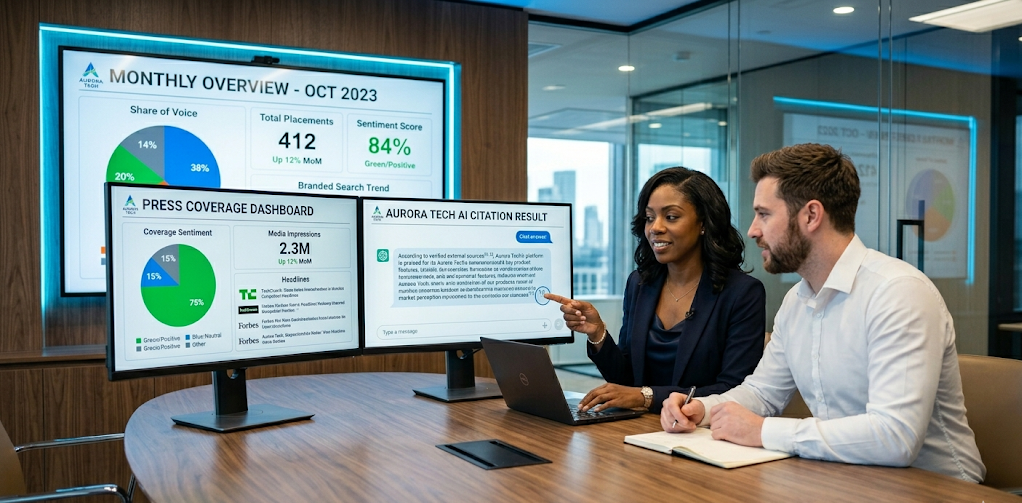
The Authority Transfer Effect in PR-Driven GEO
One of the most powerful dynamics in how PR drives GEO is what you can call the authority transfer effect.
When a publication with decades of credibility and millions of monthly readers publishes a story about your startup, some of that authority transfers to your brand.
AI engines are trained to recognize credible sources. When they repeatedly see your brand mentioned in credible outlets, they begin treating your brand itself as a credible source.
Over time, this leads to direct citation in AI-generated answers, even when the user is not asking specifically about your brand.
For example, if your startup builds project management software and you earn consistent press coverage about productivity and team collaboration, AI engines will eventually start citing your brand when users ask general questions about those topics.
That is the compounding power of how PR drives GEO.
Furthermore, this effect builds over time. The more press coverage you accumulate, the stronger the signal. A single Forbes article helps. Ten Forbes articles create a pattern.
Twenty press features across multiple outlets build a reputation that AI engines simply cannot ignore.
Why Earned Media Outperforms Paid Media for GEO
There is a common misconception among startup founders that paid media can replace earned media. It cannot, especially when it comes to GEO.
AI engines are trained to recognize the difference between editorial content and advertisements.
Earned media is content written by journalists or editors independent of your company. It carries implicit third-party endorsement.
Paid media is content you control and pay to place.
While paid media can drive traffic and conversions, it does not carry the same trust signals that AI engines use to determine what to cite.
Moreover, sponsored content and paid placements are typically labeled as such. AI engines pick up these labels and discount the authority accordingly.
In contrast, a genuine editorial feature in Inc. Magazine, for example, carries the full weight of that publication’s authority.
Additionally, a 2023 analysis by HubSpot found that earned media delivers three times more trust among consumers than paid advertising.
For AI engines, which are designed to mimic and serve human behavior and preferences, that trust differential is enormously significant.
Therefore, if you want to understand how PR drives GEO effectively, you need to prioritize earned media over sponsored content.
The ROI compounds differently, more slowly at first, but far more durably over time.
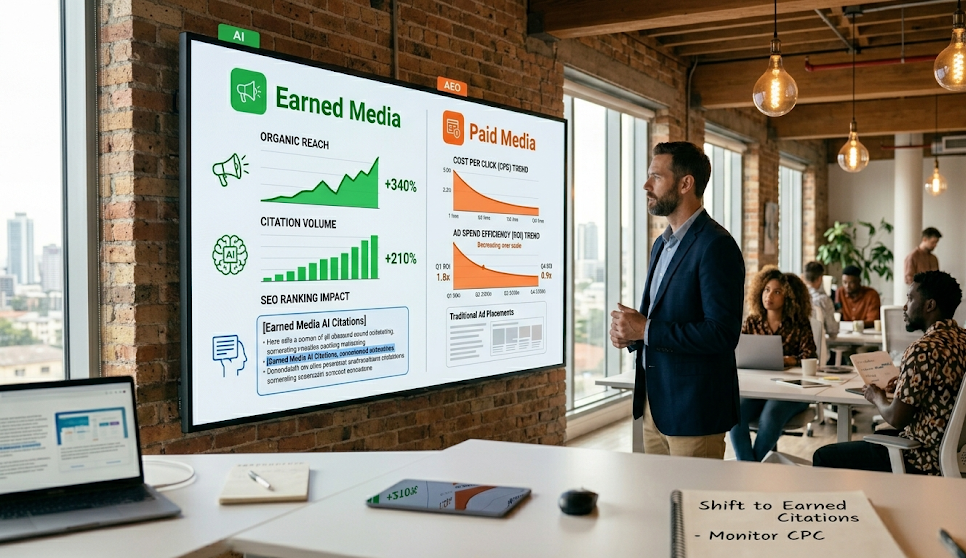
Key Differences Between Earned Media and Paid Media for GEO
Below are clear breakdown of how the two approaches differ in their impact on AI visibility:
- Earned media carries editorial authority; paid media carries promotional intent.
- AI engines cite earned content as source material; paid content is typically filtered out.
- Earned media creates backlinks that build domain authority; paid placements rarely do
- Earned coverage compounds over time as other sites reference the original story
- Paid media delivers immediate results but diminishing returns; earned media builds lasting signals.
Building an Earned Media Strategy That Powers GEO
Understanding how PR drives GEO is one thing. Building a strategy to act on it is another. Fortunately, the framework is clear and repeatable. You do not need to be a Fortune 500 brand to make it work.
You need consistency, the right story, and the right media targets.
Below is a step-by-step approach:
1. Define Your Core Narrative for PR-Driven GEO
- Before you pitch a single journalist, you need to know your story. Not your product pitch. Your narrative. What does your startup stand for?
- What problem are you solving and why does it matter now?
- What data or insight can you share that no one else has?
Your narrative should be specific enough to be credible and broad enough to be relevant to a wide audience.
For example, instead of ‘We built a payroll app,’ your narrative might be ‘We are making same-day payroll accessible to the 59 million gig workers in the US who currently wait two weeks to get paid.’
That is a story with data, context, and human stakes.
Furthermore, your narrative needs to connect to topics that your target audience is already searching for. This is where PR and GEO strategy overlap most directly.
When your story is built around the questions your audience asks AI engines, every press placement reinforces your position in those answers.
2. Target High-Authority Publications for Maximum GEO Impact
Not all press coverage is equal in terms of how PR drives GEO. A feature in a niche industry newsletter does less for your AI visibility than a placement in Forbes or Business Insider.
This is because AI engines weigh domain authority heavily when deciding what to cite.
Therefore, your media target list should prioritize high-domain-authority publications. Specifically, focus on outlets like Forbes, Inc., Entrepreneur, Bloomberg, Business Insider, Fast Company, and similar tier-one publications.
Secondly, target respected industry publications in your specific sector.
Additionally, consider publications that have a strong track record of appearing in AI-generated answers.
ou can test this yourself. Ask ChatGPT or Perplexity questions about your industry and note which publications it cites. Those are your primary targets.
3. Pitch Stories That AI Engines Value
The type of content you pitch to journalists also matters for GEO. Specifically, AI engines favor content that is data-rich, expert-driven, and directly answers a real question.
Therefore, your pitches should include original data, unique insights, or expert perspectives that journalists cannot get elsewhere.
Original research is particularly powerful. If your startup conducts a survey or compiles proprietary data, offer that data exclusively to a major publication.
The resulting article will be highly authoritative because it contains information that only exists in that outlet. AI engines love original sources.
Moreover, expert commentary placements, where a journalist quotes your founder or CEO as an authority on a topic, are equally valuable.
Each quote creates a direct association between your founder’s name and their area of expertise. Over time, AI engines begin to recognize that expertise and reference it accordingly.
How to Measure Whether PR Is Driving Your GEO Results
One of the most common questions about how PR drives GEO is also the most practical: how do you know if it is working?
The answer requires a combination of qualitative and quantitative tracking.
Start with direct AI testing. Every month, ask ChatGPT, Perplexity, and Google’s AI Overview tool questions that your target customers would ask. Track whether your brand appears in the answers.
Note which specific questions trigger your brand citation and which do not. This tells you where your GEO strategy is landing and where to focus next.
Secondarily, track your earned media coverage using a media monitoring tool like Meltwater, Mention, or Google Alerts. Log every press placement with the publication name, domain authority, article topic, and date.
Over time, you will see correlations between press coverage spikes and improvements in AI citation frequency.
Additionally, track traditional SEO metrics because they influence GEO. Domain rating, referring domains, and organic traffic all feed into the authority signals that AI engines use.
Tools like Ahrefs and Semrush provide these metrics. Set monthly benchmarks and monitor trends.
Finally, track brand search volume. When AI engines cite you frequently, more people search for your brand by name.
This creates a feedback loop. More brand searches signal relevance, which AI engines pick up, which leads to more citations. Basically, GEO and brand search growth reinforce each other.
Key Metrics to Track for PR-Driven GEO Success
Use the following metrics to measure how effectively your PR strategy is driving GEO results:
- AI citation frequency: how often your brand appears in AI-generated answers to target questions
- Press coverage volume: number of earned media placements per month across target publications
- Average domain authority of covering publications: higher is better for AI visibility
- Referring domains growth: new sites linking to your content each month
- Branded search volume: how often people search for your brand name in search engines
- Share of voice: your brand’s coverage compared to competitors across key topics
The Role of PR Agencies in Scaling GEO for Brands
At this point, you understand how PR drives GEO. The next question is execution. Many startups try to handle PR in-house and struggle to get consistent results.
Building journalist relationships takes time. Knowing which publications carry GEO weight takes experience. Crafting stories that consistently land in major outlets is a skill.
This is where a specialized PR agency delivers outsized value.
A PR agency that understands the connection between earned media and GEO can target the right publications, craft the right narratives, and execute at the consistency level that builds meaningful AI citation authority.
Moreover, the best PR agencies for startups now offer guaranteed media placements. This means you know in advance that your story will appear in a specific outlet.
For the GEO strategy, that predictability is invaluable. Instead of hoping a journalist covers you, you can plan your media calendar, align it with your product launches, and build AI citation authority on a schedule.
9-Figure Media, for example, specializes in guaranteed press placements on outlets like Forbes, Business Insider, Bloomberg, and dozens of other high-authority publications.
For startups investing in GEO, that kind of reliable, high-authority coverage is exactly the earned media fuel that AI engines run on.
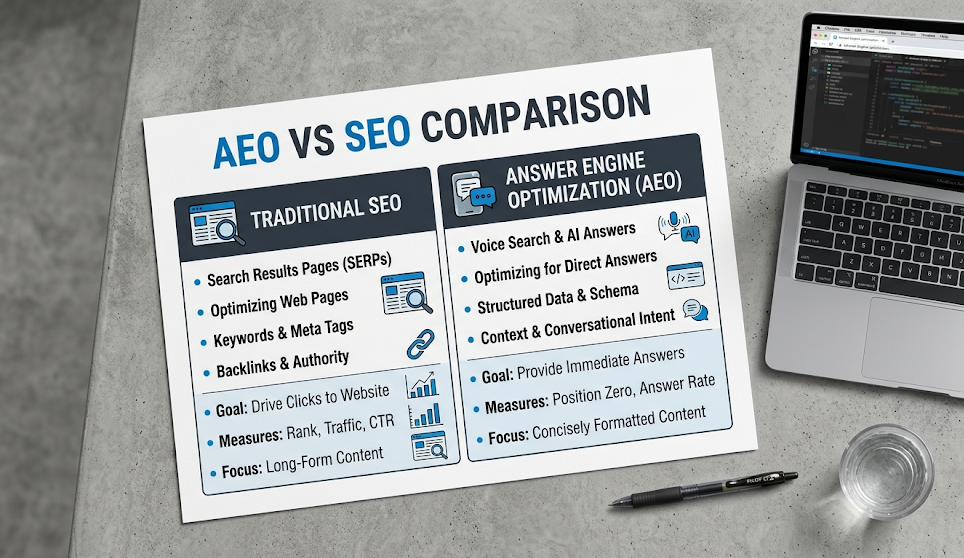
PR Is the Engine That Powers GEO
The relationship between PR and GEO is not complicated, but it is often overlooked. How PR drives GEO comes down to one simple truth: AI engines trust the same sources that journalists and editors have trusted for decades.
When your brand earns a seat at that table through genuine press coverage, AI engines take notice.
- Every press placement you earn is an investment in your AI search visibility.
- Every expert quote in a major publication teaches AI engines who you are and what you know.
- Every original research piece your brand publishes becomes a primary source that AI tools draw from when generating answers.
The startups that invest in earned media consistently are the ones that will dominate AI-generated search results over the next five years.
The window to build this advantage is open right now. Your competitors may not yet understand how PR drives GEO. That is your edge.
Start with your story. Find the right publication. Earn the coverage. Then let the authority compound. GEO does not reward shortcuts.
It rewards brands with the patience to build real credibility and the strategy to make that credibility visible to machines and humans alike.
Frequently Asked Questions
How does PR directly help with GEO?
PR earns coverage on high-authority publications. Those publications are trusted sources for AI engines. When your brand is mentioned in trusted sources repeatedly, AI engines start citing your brand in generated answers. This is how PR drives GEO in a direct, measurable way.
Which publications matter most for GEO-focused PR?
High-domain-authority publications have the most impact. Forbes, Business Insider, Bloomberg, Inc., Entrepreneur, and Fast Company are among the strongest. Additionally, well-respected industry publications in your specific niche contribute meaningfully. The key is domain authority combined with editorial credibility.
How often do you need press coverage to build GEO authority?
Consistency matters more than volume. Ideally, aim for at least two to four press placements per month in relevant publications. Over six to twelve months, this builds a pattern of authority that AI engines recognize and reward with increased citation frequency.
Can a small startup compete with large brands in AI search using PR?
Yes. AI engines do not only cite the biggest brands. They cite the most authoritative and relevant sources for a given question. A startup with consistent press coverage in the right publications can absolutely appear in AI answers alongside much larger competitors.
How long before PR starts driving GEO results?
Expect to see initial AI citation improvements within three to six months of consistent earned media activity. Significant and stable citation frequency typically builds over six to twelve months. Patience and consistency are essential. How PR drives GEO is a compounding process, not an overnight result.
