
Introduction
Public Relation Advertising confuses many business owners today. Public Relations Advertising combines two powerful forces that can transform your brand.
Here is the truth. Public Relations and Advertising are the same thing in some ways. Yet they differ in key areas too.

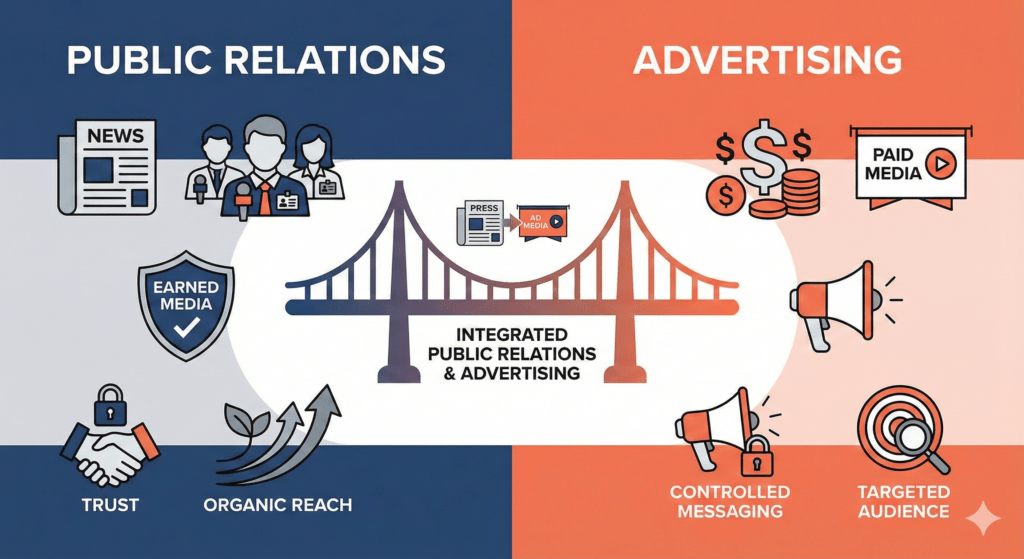
The classic difference between PR and advertising comes down to one thing. One is earned. The other is paid.
But smart brands now blend both approaches. This article gives you 9 actionable strategies for modern success.
These strategies mix the credibility of PR with advertising reach. You will learn how can businesses integrate PR and advertising effectively. Each tactic builds trust while scaling your message.
The public relation marketing strategy landscape has changed forever. Old silos between public relations vs marketing vs advertising no longer serve brands well.
9-Figure Media leads this new approach with a unique model. The agency combines compelling storytelling with guaranteed media placements. This represents the ultimate expression of modern PR advertising.
Your brand deserves both credibility and reach. These 9 strategies show you exactly how to achieve that goal.
Public Relation Advertising: 9 Powerful Strategies to Know Table of Contents
- Introduction
- What Is Public Relation Advertising? The Modern Fusion for Brand Growth
- Strategy #1: Leverage Earned Media to Fuel Your Paid Advertising
- Strategy #2: Develop a Data-Driven Public Relation Marketing Strategy
- Strategy #3: Build an Influencer Coalition for Amplified Reach
- Strategy #4: Master the Art of Newsjacking with Public Relations Advertising
- Strategy #5: Create a Thought Leadership Platform
- Strategy #6: Execute an Integrated Digital Public Relations Advertising Campaign
- Strategy #7: Leverage Social Proof in Your Direct Advertising
- Strategy #8: Repurpose Content Across the PR-Advertising Funnel
- Strategy #9: Measure the Combined ROI of Public Relations Advertising
- Conclusion: Forging the Future with Integrated Public Relations Advertising
What Is Public Relation Advertising? The Modern Fusion for Brand Growth
What is public relation advertising exactly? It represents the strategic blend of PR credibility with paid media power.
This approach has become the gold standard for brand building. Companies no longer choose between trust and reach. They now pursue both through an integrated model.
The meaning of public relations in marketing continues to change rapidly. Traditional boundaries between disciplines have dissolved completely. Smart marketers now think in terms of unified campaigns.
Defining the Integrated Approach
The meaning of public relations in marketing centers on reputation management. PR professionals earn media coverage through newsworthy stories. They build relationships with journalists and outlets.
When you add paid media, something powerful happens. Your earned coverage gains amplified reach instantly. This fusion creates the modern public relations advertising approach.
So how can businesses integrate public relations and advertising effectively? Start by viewing them as partners. PR builds the trust foundation first. Advertising then spreads that trusted message widely.
The synergy works beautifully for brand growth. PR generates third-party validation for your claims. Advertising controls exactly who sees that validation and when.
This differs completely from standalone efforts in either discipline. A pure PR campaign has limited reach control. A pure ad campaign often lacks credibility signals.
Public relations advertising and marketing now work as one unified force. Your public relation for marketing efforts become much more powerful. The combination multiplies your results significantly.
How Public Relations and Advertising Differ (And Why It Matters)
How does public relations differ from advertising at the core? The answer lies in paid versus earned media.
Advertising means you pay for guaranteed placement. You control every word in your message. The audience knows you paid for that space.
Public relations in advertising management works differently. You pitch stories to journalists who decide coverage. They write about you in their own words.
Here is a clear public relations advertising example to consider. Imagine your company launches a new product today. An ad shows your product with your claims.
A news article quotes an industry expert praising it. Which carries more weight with skeptical buyers? The earned media wins on trust every time.
How do public relations and advertising differ in audience perception? Readers trust editorial content more than ads. This explains why PR coverage converts so well.
Is public relations advertising just one thing now? Not quite. Understanding the difference between public relations and advertising with examples remains crucial. You must know the strengths of each approach.
This knowledge forms the foundation of your public relation marketing strategy. You can then combine both for maximum impact. The integration starts with respecting each discipline’s unique power.
Strategy #1: Leverage Earned Media to Fuel Your Paid Advertising
Your first strategy combines earned media with paid amplification. This approach captures the best of both worlds instantly.
Earned media provides credibility that money cannot buy directly. Paid advertising ensures your target audience actually sees it. Together, they create a powerful conversion engine.
Public relation and marketing teams must collaborate closely here. The synergy produces results neither could achieve alone. This strategy answers how are public relations and marketing related perfectly.
Securing the Social Proof Stamp of Approval
A feature in Forbes or Bloomberg changes everything for brands. This type of coverage from top public relation advertising agencies in the US provides unmatched social proof.
9-Figure Media specializes in securing exactly these placements. Their guaranteed media placement model removes uncertainty completely. Your brand gains credibility that resonates with buyers.
Now comes the repurposing phase for maximum impact. Take quotes from your media coverage directly. Use outlet logos in your advertising creative.
Add article snippets to your landing pages today. This public relations advertising example shows integration in action. Your earned media now fuels paid campaigns.
This approach directly shows how do public relations and advertising differ in execution. Yet it demonstrates perfectly how they complement each other. The credibility of PR supercharges your advertising performance.
Public relations and advertising agencies that understand this fusion dominate markets. They help clients build trust while scaling reach simultaneously. Your brand deserves this combined approach.
Crafting a Public Relations Advertising Campaign That Converts
Building ad campaigns around earned media coverage works beautifully. Start by identifying your highest-value media placements first. These become the foundation of your campaign.
Target lookalike audiences who value authority and expertise. These prospects respond strongly to third-party validation signals. Your conversion rates will climb steadily.
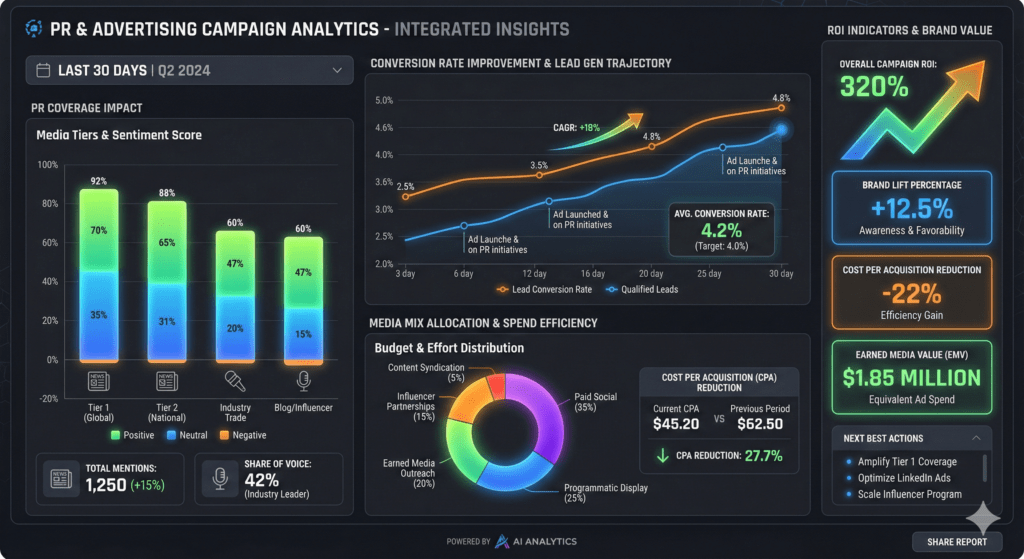
How do public relation advertising firms measure campaign success in this context? They track lifted conversion rates carefully. They monitor cost-per-acquisition improvements closely.
Common strategies used in public relation advertising campaigns include before-and-after testing. Compare ad performance with and without PR elements. The difference often surprises marketing teams.
Reviews of public relation advertising firms online confirm this approach works. Brands consistently report better ROI from integrated campaigns. The social proof element makes a measurable difference.
This represents public relations in marketing management at its finest. Data drives decisions throughout the campaign lifecycle. Results prove the value of integration clearly.
Strategy #2: Develop a Data-Driven Public Relation Marketing Strategy
Data must guide your integrated approach from day one. Guessing leads to wasted budgets and missed opportunities.
Your advertising platforms generate valuable insights constantly. Use this data to inform your PR strategy directly. The process of public relations in advertising management becomes cyclical.
Public relations and advertising research should never stop. Continuous learning improves results over time consistently.
Using Advertising Insights to Inform PR Targets
Your ad platforms reveal which headlines resonate with audiences. They show which messaging drives the most engagement. This data gold mine should inform PR pitching.
If a specific angle converts well in ads, pitch that story. Journalists want relevant stories that interest readers too. Your advertising data proves reader interest already.
The process of public relations in advertising management works both directions. PR coverage can inspire new ad creative concepts. Advertising performance validates PR story angles.
Software tools that help manage both PR and advertising make this easier. Platforms now connect these data streams seamlessly. Your team gains a unified view of performance.
This data-driven approach defines modern public relations advertising and applied communication. Programs at institutions like Public Relations Advertising and Applied Communication FIU teach this method. The integration of data across disciplines produces better results.
Related: How to Get an Article Written About You or Your Business
The Role of Public Relations And Advertising Research
Ongoing PR and advertising research keeps you ahead of competitors. You must understand audience sentiment continuously. Media trends shift quickly in the digital age.
Public relations in marketing management requires constant learning. What worked last quarter might not work today. Stay curious and keep testing new approaches.
Invest in research tools that track brand mentions. Monitor social conversations about your industry daily. This intelligence informs both PR and advertising decisions.
PR and advertising notes from campaign analyses help too. Document what works and what fails consistently. Your team builds knowledge over time.
Leading PR and advertising companies prioritize research heavily. They know that data-backed decisions outperform gut feelings. Your brand should follow this proven approach.
Strategy #3: Build an Influencer Coalition for Amplified Reach
Influencer partnerships represent modern PR advertising and entertainment marketing. This strategy blends paid and earned elements naturally.
The right influencers extend your message to engaged audiences. Their endorsement carries weight similar to media coverage. Smart brands now invest heavily in influencer relations.
Beyond Traditional Public Relations Advertising Example
Traditional PR advertising example approaches focused on media outlets only. The new reality includes social media influencers as well.
Consider the difference between paid and genuine advocacy. A paid influencer post functions as advertising clearly. Building a real advocate relationship counts as PR.
PR and creative advertising now overlap significantly in this space. The best campaigns blend both paid and organic influencer content. Authenticity remains the key factor for success.
Which platforms offer the best combined PR and advertising services for influencer work? Look for agencies that manage both disciplines. 9-Figure Media understands this integrated approach deeply.
PR advertising and entertainment marketing have merged in many ways. Celebrity and influencer partnerships drive major campaigns now. Your brand can tap into this powerful strategy.
Partner with influencers who genuinely align with your values. Their authentic enthusiasm becomes your earned media asset. Then amplify their content through paid channels strategically.
Strategy #4: Master the Art of Newsjacking with Public Relations Advertising
Newsjacking means inserting your brand into trending conversations. This real-time tactic combines PR agility with advertising speed.
Done well, newsjacking generates massive exposure quickly. Your brand becomes part of the cultural moment. The combination of earned and paid amplification multiplies reach.
Inserting Your Brand into the Cultural Conversation
Newsjacking serves as a powerful PR advertising example in action. You must monitor news trends constantly for opportunities. Speed matters more than perfection here.
When a relevant story breaks, create content immediately. Your response should add genuine value to the conversation. Empty brand mentions fall flat with audiences.
Push your content through organic PR channels first. Contact journalists covering the trending story directly. Offer your expert perspective on the situation.
Simultaneously, amplify your content through paid channels. Run targeted ads to audiences following the story. The combination of earned and paid creates maximum impact.
PR and advertising project topics often explore newsjacking case studies. The technique demonstrates integration perfectly in practice. Real-time coordination between PR and advertising teams proves essential.
Where to hire experts for PR advertising services that excel at newsjacking? Look for agencies with rapid response capabilities. 9-Figure Media maintains always-ready teams for these opportunities.
Strategy #5: Create a Thought Leadership Platform
Thought leadership establishes your brand as the industry authority. This strategy uses public relations in marketing mix principles strategically.
Executives who share expertise attract attention from journalists and buyers. Their insights become valuable content for multiple channels. The combination of PR and advertising spreads their voice.
Establishing Authority Through Public Relations In Marketing Mix
Position your brand executives as industry thought leaders today. This starts with creating original perspectives worth sharing. Generic insights fail to break through the noise.
Public relations in marketing mix efforts should include bylined articles. Place these pieces in respected industry publications directly. Journalists notice executives who publish thoughtful content regularly.
Expert commentary opportunities arise from this foundation too. Media outlets seek credible sources for their stories. Your thought leader becomes a go-to resource.
Now use advertising to promote this content widely. Target decision-makers with paid distribution campaigns. The authority of earned placements plus advertising reach works beautifully.
This solidifies your public relation for marketing foundation completely. Your brand becomes synonymous with industry expertise. Buyers trust companies led by recognized thought leaders.
The role of PR in advertising management includes protecting this thought leadership investment. Ensure your advertising amplifies only high-quality content. Weak content damages credibility even with paid support.
From Bylines to B2B Leads
This strategy drives real lead generation for B2B companies. Thought leadership content attracts qualified prospects consistently. These leads often convert at higher rates.
The PR and advertising degree jobs ecosystem values this skill highly. Professionals who can execute this strategy command premium salaries. PR and advertising salary levels reflect this demand.
Gate your best thought leadership content for lead capture. Promote these gated assets through advertising campaigns. PR coverage of your thought leaders drives organic traffic too.
Integrated PR and advertising jobs require exactly this integrated thinking. Campaigns must blend earned and paid elements smoothly. The results justify the coordination effort clearly.
PR and advertising meaning now includes lead generation directly. Modern practitioners must understand the full funnel. Your brand benefits from this holistic approach.
Related: How To Get Featured on Apple News in 2025: Guaranteed
Strategy #6: Execute an Integrated Digital Public Relations Advertising Campaign
Digital channels enable perfect integration of PR and advertising. Your campaigns can synchronize owned, earned, and paid media completely.
This strategy provides a clear example of public relations in marketing execution. Each media type supports and amplifies the others. The combined effect exceeds any single channel.
Synchronizing Owned, Earned, and Paid Media
Here is a step-by-step example of public relations in marketing success. First, create a valuable research report for your industry. This owned media asset anchors your entire campaign.
Second, secure PR coverage for your report findings. Pitch journalists with exclusive data and insights. Earned media validates your research with third-party credibility.
Third, run LinkedIn and Facebook ads promoting the coverage. Target audiences who value the credibility of media mentions. Paid media ensures maximum reach for your message.
Software tools that help manage both PR and advertising include Meltwater and Cision. These platforms track coverage and campaign performance together. Your team gains visibility across all channels.
How to create a budget for a public relation advertising campaign starts here. Allocate resources across owned, earned, and paid proportionally. Track results to refine future budget decisions.
Differences between public relations and advertising in marketing fade in these integrated campaigns. Both disciplines serve the same strategic goals. Your brand message reaches audiences through multiple trusted channels.
Strategy #7: Leverage Social Proof in Your Direct Advertising
Social proof transforms standard advertising into trusted messaging. This direct application of public relations advertising principles works immediately.
Client testimonials represent earned PR assets with high value. Media outlet logos signal third-party validation clearly. Both elements boost advertising performance significantly.
The Power of Testimonials and Media Logos
Using client testimonials in advertising demonstrates public relations advertising in action. These authentic endorsements carry weight with skeptical buyers. They function as mini PR placements within your ads.
The psychological impact of social proof is well documented. People trust messages endorsed by others like themselves. Your testimonial-rich ads outperform generic creative consistently.
Media logos create similar trust signals in advertising. An “As Seen In Forbes” badge builds instant credibility. Prospects recognize and respect these publication names.
Public relations vs advertising distinctions blur in these executions. You use PR assets within paid advertising campaigns directly. The combination produces higher trust levels.
Public relation vs advertising debates miss this integration opportunity. Smart brands no longer choose between the two. They combine both for maximum market impact.
USC public relations and advertising programs teach these integration principles. The public relations and advertising major USC prepares students for this reality. USC public relations and advertising courses cover exactly these strategies.
Strategy #8: Repurpose Content Across the PR-Advertising Funnel
Content repurposing maximizes your investment in quality assets. One piece of content fuels multiple channels efficiently.
This strategy proves crucial for how to create a budget for a public relation advertising campaign. You extract maximum value from every dollar spent. Efficiency improves without sacrificing quality.
Maximizing ROI from Every Asset
Start with a single high-quality content piece today. A research report works perfectly for this example. Now break it down into multiple components strategically.
Extract key findings for PR pitch angles. Journalists love exclusive data points and statistics. Your report becomes the source for earned coverage.
Create social media posts from interesting insights. These organic posts build awareness continuously. Add paid promotion to your best-performing organic content.
Develop webinar topics from your report themes. Host events that attract your target audience directly. Promote these events through both PR and advertising.
Pull quote graphics and statistics for ad creative. Use these elements in performance advertising campaigns. The repurposed content maintains quality throughout.
Public relations and advertising books emphasize this efficiency principle. Public relations and advertising course outline materials cover content strategies. Leading public relations and advertising masters programs teach repurposing techniques.
This approach defines smart public relations advertising and applied communication. Every asset works harder for your brand. Your budget stretches further with strategic repurposing.
Related: How to Get Featured on Chicago Tribune In 2025: Guaranteed
Strategy #9: Measure the Combined ROI of Public Relations Advertising
Measurement proves the value of your integrated approach clearly. You must move beyond vanity metrics to real business impact.
How do public relation advertising firms measure campaign success accurately? They track metrics that connect to revenue directly. This final strategy ensures accountability throughout.
Moving Beyond Vanity Metrics
How do public relation advertising firms measure campaign success in practice? They focus on shared audience engagement metrics first. They track website referral traffic from earned media carefully.
The key is connecting traffic to actual conversions. Did visitors from PR coverage become customers eventually? This attribution requires proper tracking setup.
Brand lift studies reveal how integration impacts advertising performance. Measure awareness changes before and after PR campaigns launch. See if your ad performance improves alongside.
Public relations and advertising research methods enable these measurements. Surveys, tracking pixels, and analytics combine for insights. Your team builds a complete picture of ROI.
These metrics tie back to differences between public relations and advertising in marketing value. Each discipline contributes uniquely to outcomes. The combination produces results neither achieves alone.
Difference between public relations and advertising PDF resources often cover measurement frameworks. Public relations and advertising foundations courses include ROI tracking. Professional development in measurement pays dividends.
Understanding Public Relations And Advertising Costs and Value
Public relations and advertising costs require proper attribution for justification. How do you connect sales growth to combined efforts? Start by tracking touchpoints throughout the customer journey.
Many customers interact with both PR coverage and advertising. They see a Forbes article and then encounter a retargeting ad. Both touchpoints contributed to the final sale.
Multi-touch attribution models capture this reality accurately. Assign partial credit to PR and advertising touchpoints. This approach justifies budgets for both disciplines.
Public relations and advertising management requires this financial accountability. Executives want proof that marketing investments generate returns. Your measurement framework provides that proof.
Integrated public relations and advertising BS programs teach these attribution methods. Public relations and advertising BA curricula include business measurement. Graduates enter the workforce ready to prove ROI.
The integrated budget approach works when measurement supports it. Track results carefully and share insights regularly. Your public relations advertising investment will prove its value clearly.
Conclusion: Forging the Future with Integrated Public Relations Advertising
You now have 9 powerful strategies for modern brand success. Each one demonstrates how public relations advertising drives real results.
The line between PR and advertising continues to blur for good reason. Integration produces outcomes that isolated efforts cannot match. Leading Integrated Public Relations and Advertising USF programs recognize this reality.
Here is what these strategies show you clearly:
- Earned media supercharges paid advertising performance
- Data should flow between PR and advertising teams constantly
- Influencer partnerships blend paid and earned media naturally
- Newsjacking requires real-time PR and advertising coordination
- Thought leadership content fuels both disciplines effectively
- Digital campaigns synchronize owned, earned, and paid media
- Social proof elements boost advertising trust signals
- Content repurposing maximizes budget efficiency dramatically
- Measurement proves the combined ROI clearly
The most powerful approach is always an integrated one. Public relation advertising represents the future of brand building. Your competitors are already pursuing this unified model.
Stop choosing between credibility and reach today. Let the experts at 9-Figure Media build your guaranteed public relations advertising strategy. Get featured in Forbes and use that credibility to grow sales.
Where to hire experts for public relation advertising services is now clear. 9-Figure Media combines compelling storytelling with guaranteed placements. Their unique model delivers both trust and scale.
Schedule your consultation today and transform your brand approach. The future belongs to integrated public relation advertising strategies. Your brand deserves the best of both worlds now.