
Introduction
Public Relations and Communication shape how the world sees your brand. Public Relations and Communication is the bridge between your business and your audiences. Every message you send matters.

Every interaction builds or breaks trust. Your reputation depends on strategic communication.
Most business leaders know they need PR. Yet, many struggle to understand what it truly involves. They confuse it with advertising or marketing alone.
This guide breaks down ten critical essentials. You’ll learn what works in today’s media environment. You’ll discover how to protect your brand during crises.
We’ll show you how to measure real impact. You’ll see how PR drives revenue, not just awareness. We’ll cover internal communication, legal considerations, and partnership strategies.
By the end, you’ll have a complete roadmap. You’ll know exactly how to build credibility at scale. Let’s start with the basics.
Public Relations and Communication: 10 Essentials You Must Know: Table of Contents
- Introduction
- Essential #1: What Is Public Relations and Communication All About?
- Essential #2: Why Public Relations and Communication Isn’t Just “Free Advertising”
- Essential #3: Crafting Your Public Relations and Communication Plan
- Essential #4: Public Relations and Crisis Communication: Expect the Unexpected
- Essential #5: Public Relations and Corporate Communication: Speaking with One Voice
- Essential #6: Public Relations Internal Communication: Your Secret Weapon
- Essential #7: Public Relations in Marketing Communication: The Dynamic Duo
- Essential #8: Public Relations and Law: Navigating the Legal Landscape
- Essential #9: Measuring the Impact of Your PR and Communication
- Essential #10: Partnering with Experts for Guaranteed Public Relations and Communication Success
Essential #1: What Is Public Relations and Communication All About?
What is Public Relations and Communication? It’s the practice of managing your reputation strategically. It involves building relationships with audiences that matter to your business.
PR professionals tell your brand story. They do this through earned media, not paid ads. They create messages that resonate with specific groups.
The goal is mutual understanding. You want your audiences to know who you are. You want them to trust what you stand for.
Public Relations 101 starts with this foundation. Reputation is your most valuable asset. Once damaged, it takes years to rebuild.
Excellence in Public Relations and Communication Management means going beyond basic tactics. It requires strategic thinking and careful planning. It demands consistency across every channel.
Great PR creates long-term relationships. It turns skeptics into supporters. It transforms customers into advocates.
Think about brands you trust. They’ve earned that trust through consistent communication. They’ve shown up when it mattered most.
What is Public Relations and Communication all about? It’s about controlling your narrative. Also, it’s about being heard in a crowded marketplace. It’s about building lasting credibility.
Essential #2: Why Public Relations and Communication Isn’t Just “Free Advertising”
Many executives make costly mistakes. They think PR is simply free advertising. This misunderstanding leads to wasted efforts and missed opportunities.
Advertising is transactional. You pay for space and control the message completely. You tell people why they should buy from you.
PR is relational. You earn coverage through newsworthy stories and genuine relationships. Journalists decide if your story deserves their audience’s attention.
The difference matters deeply. People trust earned media three times more than paid ads. They see advertising as biased promotion.
How are Public Relations and Marketing related? They work together but serve different purposes. Marketing pushes your message to target audiences.
PR pulls audiences toward your brand organically. It builds credibility that marketing can’t buy. It creates the trust that makes marketing effective.
Think of it this way. Marketing tells people you’re great. PR shows them why others think you’re great.
A journalist’s endorsement carries weight. An influencer’s genuine recommendation creates action. A customer’s testimonial builds confidence.
You need both functions working in harmony. Marketing creates awareness and drives sales. PR builds the trust that makes those sales possible.
Public Relations in Marketing Communication amplifies your campaigns. It adds third-party validation to your messaging. It makes skeptical buyers more willing to engage.
Stop treating PR as free advertising. Start seeing it as relationship-building at scale. Your bottom line will reflect the difference.
Essential #3: Crafting Your Public Relations and Communication Plan
Flying blind never works in business. You need a clear plan for your communication efforts. Without one, you waste time, money, and opportunities.
A strong Public Relations and Communication strategy starts with research. You must understand your current position. You need to know where you want to go.
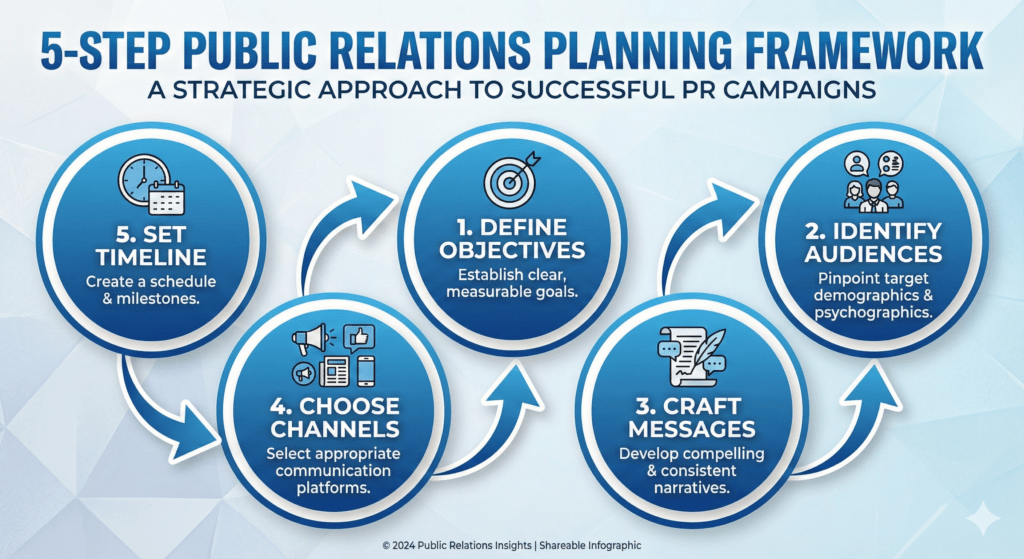
Here’s a simple framework to follow. First, define your business objectives clearly. What outcomes do you need from PR?
Second, identify your target audiences. Who needs to hear your message? What do they care about right now?
Third, craft your key messages. What three things should people remember about your brand? How do these messages support your business goals?
Fourth, choose your channels strategically. Where does your audience consume information? Which platforms deliver the best return?
Fifth, set a realistic timeline. When will you execute each tactic? How will you maintain momentum over time?
A Public Relations Communication Plan Example might look like this. Goal: Increase brand awareness among C-suite executives. Audience: CEOs and CFOs at mid-market companies.
Key Messages: We solve complex problems, We deliver measurable results, We’ve worked with industry leaders. Channels: Industry trade publications, LinkedIn thought leadership, speaking engagements.
Timeline: Quarter one focuses on media outreach. Quarter two emphasizes content creation. Quarter three targets event participation.
Your plan should be specific. It should guide daily decisions. It should connect every action to business outcomes.
Review your plan quarterly. Market conditions change rapidly. Your strategy must adapt to stay effective.
Related: Top 15 Game-Changing PR Agencies in New York You Need to Know In 2025
The Role of Research in Your PR and Communication Strategy
What is Public Relations and Communication Management without solid research? It’s guessing, not strategy. You need data to make smart decisions.
Start by listening to your audiences. What questions do they ask repeatedly? What concerns keep them up at night?
Analyze your competitors’ communication approaches. Where are they getting coverage? What messages are they pushing?
Study media trends in your industry. Which publications reach your target audience? Which journalists cover your topics?
Survey your existing customers. Why did they choose you? What do they value most about your brand?
Track social conversations about your company. What are people saying when you’re not in the room? Where do misperceptions exist?
This research reveals opportunities. It shows you gaps in the market. It highlights stories that journalists will actually want.
Effective Public Relations and Communication Management starts with understanding, not assumptions. Data drives better decisions. Better decisions drive better results.
Setting SMART Goals for Your Public Relations and Communication Efforts
Vague goals produce vague results. You need clear targets to measure success. SMART goals provide that clarity.
Specific: “Get more press” is too broad. “Secure five features in top-tier business publications” works better.
Measurable: Define success with numbers. Track media placements, website traffic, lead generation, or sentiment shifts.
Achievable: Set goals you can realistically reach. Aim for steady progress, not overnight transformation.
Relevant: Connect every PR goal to business outcomes. How does this coverage help you acquire customers? How does this thought leadership support sales?
Time-bound: Give yourself deadlines. “This quarter” is better than “someday.” Deadlines create urgency and focus.
A SMART goal example: “Secure three thought leadership articles in industry publications by March 31st. Generate 500 qualified website visits from these placements.”
Another example: “Increase positive brand sentiment by 15% among target executives. Achieve this by publishing 12 expert opinion pieces this year.”
Track your progress weekly. Adjust tactics when you’re falling behind. Celebrate wins to maintain momentum.
Public Relations and Communication become measurable with SMART goals. You can prove ROI to stakeholders. You can justify your budget and resources.
Essential #4: Public Relations and Crisis Communication: Expect the Unexpected
Every business faces crises. Product recalls, executive scandals, data breaches, negative reviews. The question isn’t if but when.
Public Relations and Crisis Communication prepares you for these moments. It’s your playbook when everything goes wrong. It protects your reputation when it’s most vulnerable.
Start by identifying potential crises. What could realistically go wrong in your business? What events would damage your reputation?
Create response protocols for each scenario. Who speaks for the company? What approval process do statements require?
Draft holding statements in advance. You won’t have time to wordsmith during a crisis. Prepare templates you can quickly customize.
Designate a crisis team. Include leadership, legal counsel, PR specialists, and key operational staff. Everyone must know their role.
Establish monitoring systems. You need to detect brewing issues early. Social listening tools catch problems before they explode.
Speed matters in crisis response. The first 24 hours shape public perception. Silence looks like guilt or incompetence.
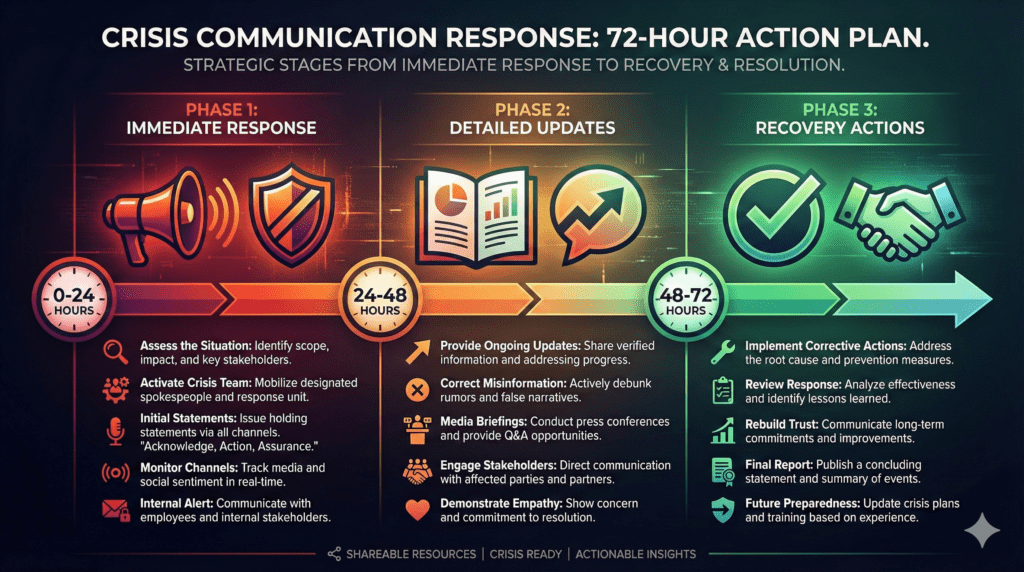
Transparency builds trust during difficult times. Admit mistakes when you’ve made them. Explain what you’re doing to fix things.
Regular updates keep audiences informed. Even saying “we’re still investigating” is better than radio silence. People respect honest communication.
Practice your crisis plan annually. Run through scenarios with your team. Identify weaknesses before a real crisis hits.
Public Relations and Crisis Communication isn’t optional. It’s essential protection for your business. One well-handled crisis can actually strengthen your reputation.
Essential #5: Public Relations and Corporate Communication: Speaking with One Voice
Your brand speaks through many channels. Press releases, investor reports, social media, and executive speeches. Each touchpoint shapes perception.
Public Relations and Corporate Communication ensure consistency across these channels. It aligns your messaging with your business strategy. It presents a unified front to the world.
Corporate communication targets specific stakeholders. Investors need financial performance updates. Customers want product information and company values.
Partners require clear collaboration guidelines. Regulators demand compliance documentation. Each audience needs tailored messages.
Yet, the core narrative must remain consistent. Your values shouldn’t change between audiences. Your brand promise should ring true everywhere.
Create a master messaging document. Define your brand story, key messages, and proof points. Distribute this to everyone who communicates externally.
Establish approval workflows for major announcements. Leadership should review messages before they go public. This prevents off-brand communication.
Train executives on media interactions. They represent your brand in interviews and panels. They need consistent talking points and messaging.
Monitor all external communications. Catch inconsistencies before audiences notice them. Correct mistakes quickly and decisively.
What is Public Relations and Communication Services in the corporate context? It’s the discipline of reputation management. It’s protecting and enhancing how stakeholders view your organization.
Strong corporate communication drives business results. It attracts investors and top talent. It builds customer loyalty and partner confidence.
Related: Top 25 Public Relations Agencies in 2025: Exclusive List
Essential #6: Public Relations Internal Communication: Your Secret Weapon
Your employees hear your messages before anyone else. They see behind the curtain. They know what’s real and what’s performance.
Public Relations Internal Communication turns your team into brand advocates. It keeps everyone aligned on goals and messages. It builds the culture that drives success.
Start with transparency. Share company news with employees first. They should never learn about major changes from external media.
Explain the “why” behind decisions. People support what they understand. They resist when they feel left in the dark.
Create regular communication channels. Weekly updates, monthly town halls, quarterly strategy sessions. Consistent communication builds trust over time.
Encourage two-way dialogue. Let employees ask questions and voice concerns. Listen to their feedback and act on it.
Celebrate wins publicly. Recognize team members who embody your values. Show everyone what success looks like.
Address challenges honestly. Employees know when things aren’t perfect. Sugarcoating problems destroys credibility faster than the problems themselves.
Train managers as communication ambassadors. They’re your frontline messengers. They translate corporate messages into team-level action.
Public Relations Internal Communication directly impact external reputation. Happy employees create happy customers. Aligned teams deliver consistent brand experiences.
Strong internal communication reduces turnover. It attracts better talent during hiring. It makes your company a place people want to work.
Public Relations and Human Resources: A Powerful Partnership
Public Relations and Human Resources must work together closely. Both functions shape your employer brand. Both impact talent attraction and retention.
HR owns the employee experience. PR shapes how that experience is communicated. Together, they create a compelling employer brand.
Onboarding new hires requires clear communication. New employees need to understand your culture quickly. They need to know how to represent the brand.
Company culture initiatives need PR support. Internal campaigns drive adoption of new values. External PR attracts candidates who share those values.
Employee advocacy programs blend both functions. HR manages the program structure. PR provides training and content for employees to share.
Crisis management needs HR and PR coordination. Many crises involve employee issues. Harassment claims, layoffs, and safety incidents all require a joint response.
Leadership changes require careful communication. HR handles the transition logistics. PR manages internal and external messaging about the change.
Benefits and compensation changes need strategic communication. HR determines the policy. PR crafts messages that maintain morale and trust.
Public Relations and Human Resources partnerships create stronger organizations. They ensure consistent messaging to all audiences. They build cultures that attract and retain top talent.
Essential #7: Public Relations in Marketing Communication: The Dynamic Duo
Marketing and PR are siblings, not twins. They share goals but use different tools. Together, they create unstoppable momentum.
Public Relations in Marketing Communication adds credibility to promotional campaigns. It provides third-party validation that marketing can’t create alone. It makes your marketing messages more believable.
Marketing launches a new product. PR secures media reviews that validate its quality. The combination drives more sales than either function alone.
Marketing creates brand awareness. PR builds the trust that converts awareness into action. People buy from brands they trust.
Marketing targets specific demographics. PR reaches broader audiences through earned media. This expands your potential customer base.
Marketing controls message timing and placement. PR creates organic buzz that money can’t buy. This buzz lasts longer than paid campaigns.
Content marketing benefits from PR amplification. A white paper gets limited reach alone. PR places it in industry publications for massive exposure.
Event marketing gains credibility through PR. Media coverage before and after events drives attendance. It extends the event’s impact beyond attendees.
Influencer marketing becomes more effective with PR support. PR professionals identify the right influencers. They manage relationships for long-term partnerships.
How are Public Relations and Marketing related? They’re strategic partners. They should share goals and coordinate efforts. They should measure success together.
The best results come from integration. Plan campaigns with both teams from the start. Create unified strategies that leverage each function’s strengths.
Essential #8: Public Relations and Law: Navigating the Legal Landscape
Every PR message has legal implications. What you say can expose you to liability. What you don’t say can create problems too.
Public Relations and Law intersect constantly in modern business. You need to understand the legal framework. You need to communicate within safe boundaries.
Defamation laws protect reputations. You can’t make false statements about competitors. You can’t spread damaging rumors without proof.
Copyright laws govern content use. You need permission to use others’ images or text. Fair use has limits that PR professionals must understand.
Trademark laws affect brand communication. You can’t create confusion with similar marks. You must protect your own trademarks vigilantly.
Securities regulations control corporate disclosures. Public companies face strict rules about financial information. Violations carry serious penalties.
Privacy laws restrict how you use personal data. GDPR, CCPA, and similar regulations have teeth. Violations damage reputation and drain resources.
Influencer marketing faces FTC disclosure requirements. Sponsored content must be clearly labeled. Violations hurt both brands and influencers.
Employment laws affect internal communication. What you say about employees has legal limits. Performance discussions require careful wording.
Contract law governs vendor and partner relationships. PR agencies need solid agreements. Influencer contracts must spell out expectations clearly.
Work with legal counsel on sensitive communications. They’ll review statements before release. They’ll flag potential problems you might miss.
Related: 20 Top Public Relations Agencies That Deliver Real Media Results
The Legal Pitfalls in PR and Communication
Smart PR professionals avoid common legal mistakes. Here are key considerations for every campaign.
Influencer contracts need clear terms. Define deliverables, compensation, and disclosure requirements. Specify content ownership and approval rights.
Financial disclosures require precision. Public companies must follow SEC regulations. Private companies should still be accurate and honest.
User data privacy affects customer communication. Get consent before using customer stories. Protect personal information in all communications.
Testimonials and endorsements need verification. Claims must be genuine and provable. False testimonials create legal and reputational risk.
Comparative advertising faces legal scrutiny. You can compare products if the claims are true. Misleading comparisons invite lawsuits and regulatory action.
Product claims must be substantiated. “Clinically proven” requires actual clinical studies. “Best in class” needs objective proof.
Crisis communication requires legal review. Apologies can be seen as admissions of guilt. Balance transparency with legal protection.
Employee statements about the company need guidelines. Social media policies should clarify what’s acceptable. Protect confidential information while encouraging advocacy.
Understanding Public Relations and Law protects your brand. It prevents costly mistakes. It keeps your communication both effective and safe.
Essential #9: Measuring the Impact of Your PR and Communication
“How does PR build revenue?” Every executive asks this question. The answer lies in measuring the right things.
Public Relations and Communication drives business results. You just need to track metrics that matter. Vanity metrics like total impressions don’t prove value.
Start with website traffic from earned media. How many people visited after the coverage appeared? Which articles drove the most engaged visitors?
Track lead quality from PR efforts. Are media-driven leads more qualified? Do they convert at higher rates?
Monitor brand sentiment shifts. Use social listening tools to measure perception changes. Positive sentiment correlates with purchase intent.
Measure the share of voice in your industry. Are you mentioned more than your competitors? Are your messages breaking through the noise?
Track message pull-through in coverage. Do journalists use your key messages? Does your perspective dominate industry conversations?
Analyze conversion rates from featured links. How many readers become leads? How many leads become customers?
Calculate customer acquisition cost for PR-driven customers. Compare this to other channels. PR often delivers lower CAC than paid advertising.
Measure partnership and collaboration opportunities from media exposure. How many strategic relationships started with PR visibility?
Survey customers about purchase influences. How many did you earn through earned media? How many were swayed by third-party validation?
Excellence in Public Relations and Communication Management shows in these metrics. They prove PR’s contribution to growth. They justify continued investment.
Beyond Clippings: Modern Metrics for PR and Communication Services
Old-school PR measured success in press clippings. Modern Public Relations and Communication Services track business impact instead.
Share of voice shows competitive positioning. It measures your presence versus competitors. A growing share indicates effective PR.
Message penetration tracks key message adoption. It shows how often your talking points appear in coverage. High penetration means your narrative is winning.
Media quality score evaluates placement value. Tier-one outlets score higher than tier-three. Relevant publications score higher than tangential ones.
Audience reach measures potential exposure. It counts the audience of each outlet. Qualified reach matters more than total numbers.
Engagement metrics show how people interact with coverage. Comments, shares, and click-throughs indicate resonance. High engagement signals compelling content.
Domain authority of linking sites impacts SEO. Earned links from high-authority sites boost search rankings. This has driven organic traffic for years.
Conversion attribution connects PR to sales. Track which touchpoints led to purchases. Assign appropriate credit to earned media.
Brand lift studies measure perception changes. Before and after surveys show PR impact. They reveal shifts in awareness, consideration, and preference.
Customer lifetime value for PR-acquired customers often exceeds other channels. These customers tend to be more loyal. They require less convincing and have higher satisfaction.
These modern metrics prove Public Relations and Communication Services’ value. They connect PR activities to revenue. They show executives why PR matters.
Essential #10: Partnering with Experts for Guaranteed Public Relations and Communication Success
Mastering all these essentials takes years. It requires deep expertise and extensive networks. It demands constant attention and strategic thinking.
Most executives have more important things to do. They need to focus on core business operations. They need partners who deliver results while they focus on growth.
Public Relations and Communication specialists bring expertise you can’t build quickly. They have relationships journalists trust. They know what stories will land.
Agencies offer perspectives you can’t get internally. They see patterns across industries. They know what works now, not what worked five years ago.
Professional PR firms handle the “journalist won’t respond” problem. They have existing relationships and credibility. They get replies when cold outreach fails.
Top agencies guarantee results because they control the outcome. They don’t just pitch and hope. They have confirmed placement opportunities.
Cost-effectiveness favors specialized partners. Building an in-house team costs more. Agencies scale up or down based on your needs.
Speed matters in competitive markets. Agencies execute faster than internal teams. They start delivering results from day one.
Excellence in Public Relations and Communication Management requires the right partner. Choose agencies with proven track records. Look for guaranteed results, not vague promises.
How 9-Figure Media Masters Public Relations and Communication
9-Figure Media takes a different approach to Public Relations and Communication. We don’t just pitch your story and hope. We guarantee placements in top-tier media outlets.
Our methodology combines compelling storytelling with an unmatched media network. We know which stories resonate with specific journalists. Also, we have confirmed relationships that get responses.
We start by understanding your business goals. What outcomes do you need? How does media coverage support those outcomes?
We craft stories that journalists actually want to publish. Not advertorials or puff pieces. Real stories that add value to their readers.
We leverage our network to secure guaranteed placements. Forbes, Entrepreneur, Inc., Business Insider, and other top-tier outlets. Your story appears where your audience pays attention.
We measure real business impact. Website traffic, lead generation, brand sentiment, and competitive positioning. We connect every placement to your bottom line.
We handle crisis communication with speed and expertise. When issues arise, we know exactly what to do. We protect your reputation when it matters most.
What is Public Relations and Communication Management at 9-Figure Media? It’s delivering measurable results through guaranteed media placements. It’s building credibility that drives revenue.
We’ve helped hundreds of businesses transform their visibility. Additionally, we’ve turned unknown brands into industry authorities. We’ve protected reputations during difficult times.
Our clients don’t wonder if PR works. They see the traffic, the leads, the sales. They watch their brand authority grow month by month.
Public Relations and Communication are too important to leave to chance. Partner with experts who guarantee results. Contact 9-Figure Media today to start building the credibility your business deserves.