
Sarah owned a small handmade jewelry shop that struggled to gain customers. Social media PR strategies transformed her business almost overnight. She implemented a targeted social media PR strategy that connected her unique designs with interested buyers across platforms. Social media PR Agencies create visibility that traditional methods cannot match for small businesses today.
Small companies now compete with larger brands through smart social media PR agencies, partnerships, and consistent messaging. The digital landscape has changed dramatically for small business owners in recent years.

Gone are the days when public relations meant costly press releases and media connections. Now, every business can share its story directly with customers.
This change gives small businesses an unprecedented opportunity to build their brand. You can reach thousands of potential customers without a massive marketing budget.
Social media PR combines strategic communication with platform-specific content. This powerful approach helps businesses connect with audiences in meaningful ways.
Why Social Media PR Matters for Your Small Business [Especially in 2026]: Table of contents
- The Evolution of PR in the Social Media Age
- Understanding Social Media PR Strategy Fundamentals
- Benefits of Social Media PR for Small Businesses
- Crafting Your Social Media PR Strategy
- Essential Social Media PR Tactics for 202 6
- Measuring Social Media PR Success
- Case Studies: Social Media PR Success Stories
- Common Pitfalls and How to Avoid Them
- The Future of Social Media PR (Trends for 2026-2027)
- FAQ Section
- What is the difference between social media marketing and social media PR?
- How much should small businesses budget for social media PR?
- Which social media platforms are most effective for PR in 2026?
- Can I handle social media PR in-house, or should I hire an agency?
- How quickly can I expect results from social media PR strategies?
- How do I measure the ROI of my social media PR efforts?
- What are the first steps to implementing a social media PR strategy?
- Conclusion
- Call to Action
The Evolution of PR in the Social Media Age
Traditional PR relied on press releases, media relationships, and print coverage. These methods worked but required substantial resources and connections. Small businesses often found themselves priced out of effective public relations campaigns.
Today, over 4.8 billion people use social media worldwide in 2026. The average person spends nearly 2.5 hours daily across various platforms. This massive shift has created new opportunities for public relations and social media integration.
Traditional PR still matters, but no longer works alone in our connected world. Consumers expect to interact with brands directly through social channels.
Social media relations have become the new foundation of effective public outreach. Businesses can now bypass traditional gatekeepers and speak directly to their audience.
This democratization has leveled the playing field for small businesses. You can build meaningful connections without massive budgets or extensive media contacts.
The lines between marketing, customer service, and pr social media have blurred. This integration creates opportunities for comprehensive brand communication strategies.
Small businesses can now compete with larger corporations in ways previously impossible. Direct audience engagement creates authentic connections that big brands struggle to match.

Understanding Social Media PR Strategy Fundamentals
A social media PR strategy combines planned content, community engagement, and crisis management. This approach creates consistent brand messaging across all digital touchpoints. The goal remains building positive public perception through strategic communication.
Using social media for PR connects content marketing with community building and reputation management. Each post, reply, and story contributes to how people perceive your business. Smart businesses integrate these elements into a cohesive strategy.
Current trends show that video content dominates engagement across platforms in 2026. Short-form vertical videos continue to drive the highest reach for small businesses.
Platform algorithms reward consistency, engagement, and authentic communication. Your content must connect with real people while satisfying technical requirements for visibility.
Transparency has become non-negotiable for effective social media pr strategies. Modern consumers detect inauthenticity immediately and share their opinions widely.
Data-driven decisions should guide your approach to platform selection and content. Understanding platform demographics helps target your ideal customers efficiently.
Brand voice consistency matters across all platforms and team members. Develop clear guidelines that capture your unique business personality.
Responsive community management proves equally important as content creation. How you handle questions and concerns shapes public perception dramatically.
Read Also: Digital PR Agency: What They Do and Why Your Brand Needs One
Benefits of Social Media PR for Small Businesses
Cost-effectiveness compared to traditional PR methods
Traditional PR campaigns often cost thousands of dollars with uncertain returns. Social media PR Agencies requires primarily time and creativity rather than large budgets. Small businesses can achieve meaningful results with strategic planning and consistent effort.
Free platform tools provide powerful capabilities for targeting specific audiences. Paid promotion options start at small amounts that fit within tight budgets.
You can scale efforts gradually based on business growth and available resources. This flexibility makes pr social media accessible to businesses of all sizes.
Increased brand visibility and recognition
Consistent social media PR efforts build cumulative visibility over time. Your content reaches people who might never encounter your business through traditional channels.
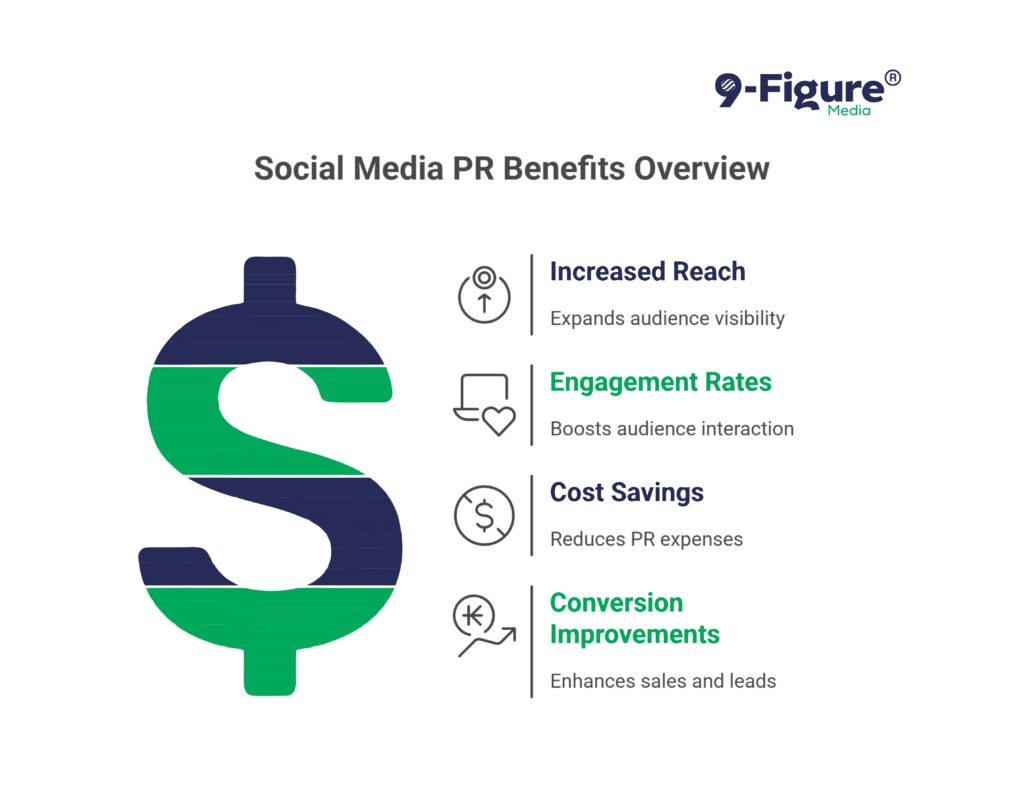
Image Idea: An infographic showing key statistics about social media PR benefits, with simple icons and short text highlighting metrics like increased reach, engagement rates, cost savings compared to traditional PR, and conversion improvements.
Cross-platform strategies amplify your message across different audience segments. Each mention, share, and comment extends your reach organically.
Strategic hashtag usage connects your content with interested communities. This targeted approach helps small businesses find their specific audience.
Building customer trust and loyalty
Direct communication builds stronger connections than traditional advertising. Customers appreciate businesses that respond promptly to questions and concerns.
Using social media for public relations creates opportunities for authentic storytelling. Sharing your business journey helps customers connect with your brand purpose.
Consistent value-based content positions your brand as a helpful resource. This approach builds trust long before customers make purchase decisions.
Direct engagement with target audiences
Two-way communication creates meaningful dialogue with potential customers. You learn directly about their needs, preferences, and pain points.
Real-time feedback helps refine products and services to match market demands. This customer-centered approach leads to better business outcomes.
Community building creates brand advocates who promote your business naturally. These authentic recommendations carry more weight than paid advertising.
Crisis management capabilities
Fast response capability helps contain potential issues before they escalate. Social media PR strategy includes monitoring mentions and addressing concerns quickly.
Direct communication channels allow clear messaging during challenging situations. You can share accurate information without media interpretation.
Transparent handling of problems often converts critics into loyal supporters. People respect businesses that acknowledge mistakes and make improvements.
Measurable ROI and analytics advantages
Detailed analytics show exactly how your pr and social media strategy performs. You can track engagement, reach, click-through rates, and conversions.
Campaign adjustments can happen immediately based on performance data. This agility gives small businesses a significant advantage over larger competitors.
Clear performance metrics help justify continued investment in social media efforts. Connecting online activities to business outcomes demonstrates true value.
Platform insights reveal which content resonates most with your audience. These learnings improve future content planning and resource allocation.
Read Also: Unspoken Benefits Of Choosing The Right PR In Marketing
Crafting Your Social Media PR Strategy
Step-by-step approach to developing a social media PR plan
Start by defining clear, measurable goals for your social media PR Agencies effort. Common objectives include increased brand awareness, website traffic, or lead generation.
Research competitors to identify opportunities and differentiation points. Learn from their successes and failures before creating your strategy.
Create a content calendar that balances planned posts with timely responses. This framework ensures consistent messaging while remaining flexible.
Develop crisis response protocols before you need them. Prepare templates and approval processes for various potential situations.
Build relationships with relevant influencers and media contacts gradually. These connections amplify your message to wider audiences.
Audience research and persona development
Identify your ideal customer through demographic and psychographic research. Create detailed personas that describe their needs, preferences, and behaviors.
Use platform analytics to understand when your audience is most active. This insight helps schedule content for maximum visibility and engagement.
Survey existing customers about their social media habits and preferences. Direct feedback often reveals unexpected insights about platform usage.
Monitor conversations related to your industry or products. These discussions show what matters most to potential customers.
Platform selection based on business goals and audience
Choose platforms where your target audience spends meaningful time. Focus on quality engagement rather than spreading resources too thinly.
Understand each platform’s unique content requirements and audience expectations. Content that works on Instagram often fails on LinkedIn without adaptation.
Consider your business type when selecting primary platforms. Visual products typically perform better on Instagram and Pinterest.
Service businesses often find better results on LinkedIn and Facebook. These platforms support detailed information and community building.
Content planning for maximum engagement
Create a balanced mix of promotional, educational, and entertaining content. Following the 80/20 rule helps avoid excessive self-promotion.
Develop content pillars that guide consistent themes across your channels. This framework simplifies planning while maintaining strategic focus.
Plan for seasonal trends, industry events, and relevant holidays. These timely topics increase content relevance and engagement potential.
Repurpose core content across multiple formats and platforms. This approach maximizes the value of your content creation efforts.
Creating a consistent brand voice
Define your brand personality with specific tone, vocabulary, and values. Document these guidelines for anyone creating content for your channels.
Train team members on voice guidelines and response protocols. Consistent communication builds stronger brand recognition.
Create templates for common response situations to maintain consistency. These resources help during busy periods or with multiple team members.
Review content regularly to ensure voice consistency across all platforms. Small adjustments help maintain an authentic brand personality.
Integration with broader marketing objectives
Align social media PR strategies with overall business and marketing goals. This integration creates consistent customer experiences across all touchpoints.
Coordinate social campaigns with other marketing activities for maximum impact. Email, website, and in-store promotions should complement social efforts.
Share social proof across marketing channels to build credibility. Customer testimonials and social engagement demonstrate real value.
Use consistent visual elements across all marketing materials. This visual cohesion strengthens brand recognition and professional appearance.
9-Figure Media PR Agency helps small businesses develop integrated strategies. Our approach ensures all marketing elements work together effectively.
Read Also: How to Craft a PR Strategy That Gets Results: A Step-by-Step Guide for Startups
Essential Social Media PR Tactics for 2026
Influencer partnerships and collaborations
Micro-influencers often deliver better results for small businesses than celebrities. Their engaged followers trust their recommendations more readily.
Focus on authentic partnerships with influencers who genuinely like your products. Forced promotions appear insincere and harm both parties’ credibility.
Create clear campaign objectives and measurement criteria. This clarity helps both parties understand success expectations.
Consider long-term relationships rather than one-off promotions. Consistent advocacy builds more credibility than isolated mentions.
Provide creative freedom within brand guidelines for better content. Influencers understand their audience and how to communicate effectively.
Employee advocacy programs
Empower team members to share company content with their networks. Their personal connections often trust their recommendations implicitly.
Create shareable content that employees feel proud to post. Quality matters more than quantity for effective advocacy.
Recognize and reward participation to encourage ongoing involvement. Simple acknowledgment often motivates continued sharing.
Provide clear guidelines that balance brand messaging with personal expression. This flexibility creates more authentic communication.
Train employees on best practices for professional social sharing. This support helps them represent your brand effectively.
User-generated content campaigns
Encourage customers to share their experiences with your products or services. This authentic content builds trust with potential buyers.
Create specific hashtags for customers to use when sharing. These tags help track campaign performance and collect content.
Request permission before resharing customer content on your channels. This courtesy maintains positive relationships and legal compliance.
Feature user content prominently to show appreciation and build community. This recognition encourages others to participate.
Respond thoughtfully to all shared content, especially critical feedback. This engagement demonstrates your commitment to customer satisfaction.
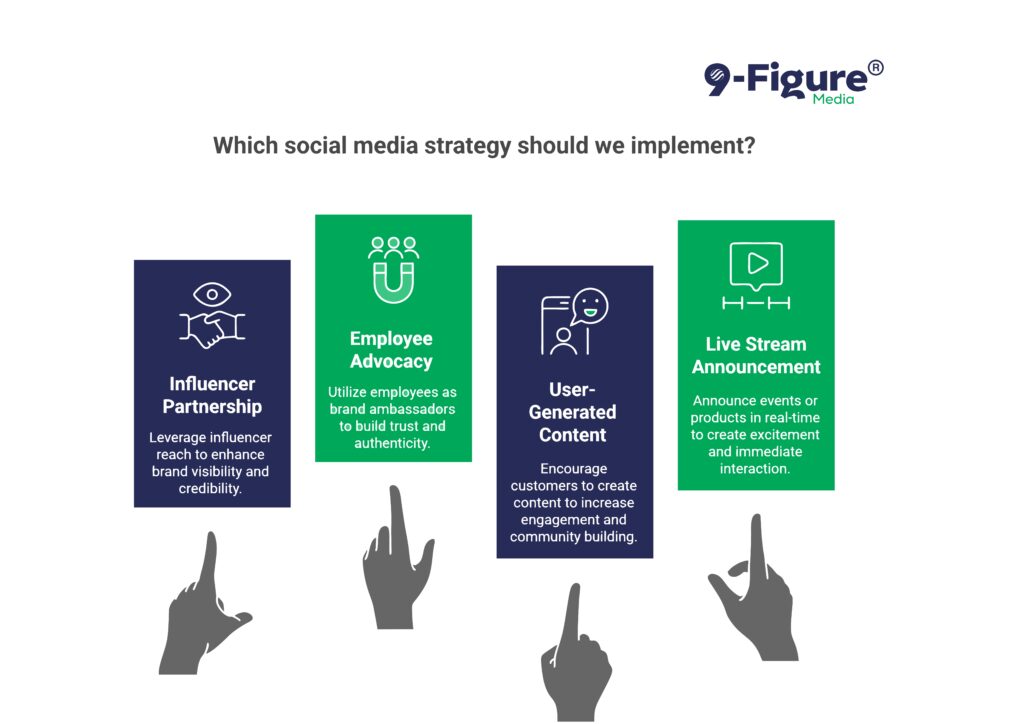
Live streaming and interactive content
Host regular live sessions that provide value beyond typical promotions. Q&A sessions, behind-the-scenes tours, and tutorials work particularly well.
Prepare thoroughly while leaving room for authentic interaction. This balance creates professional but engaging experiences.
Promote live events in advance to maximize attendance. Multi-channel promotion reaches more potential viewers.
Repurpose live content into shorter clips and other formats. This approach extends the value of your creation efforts.
Encourage active participation through questions and comments. This engagement increases reach through algorithm preferences.
Cause marketing and social responsibility initiatives
Align with causes that genuinely connect to your brand values. Authentic commitments resonate more than opportunistic campaigns.
Share your social impact journey, including challenges and learning. This transparency builds trust in your commitments.
Partner with local organizations for mutual community benefit. These relationships create meaningful local connections.
Invite customer participation in your social responsibility efforts. This involvement strengthens community connections.
Measure and share the impact of your initiatives. Concrete results demonstrate real commitment beyond marketing.
AI-powered personalization and engagement
Use AI tools to deliver more relevant content to specific audience segments. This personalization increases engagement and conversion rates.
Implement chatbots for immediate response to common questions. This availability improves customer experience, especially outside business hours.
Analyze conversation patterns to identify emerging issues quickly. This proactive approach prevents potential crises.
Create dynamic content that adapts based on user behavior. This relevance improves engagement metrics substantially.
A recent client of ours increased engagement by 78% through AI-powered content personalization. Their strategic approach transformed customer interactions.
Measuring Social Media PR Success
Social Media PR Agencies establish clear KPIs aligned with business objectives before campaigns begin. Common metrics include reach, engagement, website traffic, and conversions.
Look beyond vanity metrics to measures that connect to business results. Follower counts matter less than qualified leads or sales.
Use platform-specific tools alongside third-party analytics for comprehensive views. This combination provides deeper insights than either alone.
Social Media PR Agencies set up proper tracking parameters to attribute results accurately. UTM codes help connect social activity to website behavior.
Regular reporting schedules maintain focus on strategic objectives. Monthly reviews allow sufficient data for meaningful analysis.
Compare performance across platforms to optimize resource allocation. This analysis helps focus efforts where they deliver the best results.
Calculate return on investment by comparing costs against measurable outcomes. This financial perspective justifies continued investment.
Adjust strategies based on data rather than assumptions or preferences. This objective approach improves results consistently over time.
Consider qualitative metrics alongside numbers for complete understanding. Customer testimonials and sentiment analysis provide valuable context.
Case Studies: Social Media PR Success Stories
Mountain View Bakery faced closure until its social media PR strategy transformed its business. Their behind-the-scenes content showcasing artisan techniques generated 350% increased foot traffic within three months.
The small bakery created shareable “bake along” videos that regularly reached 50,000+ views. Their authentic approach connected with local customers seeking quality products.
TechSolve Repairs implemented user testimonial campaigns across platforms. The IT service company saw 127% growth in new clients directly attributed to social media PR Agencies.
Their technicians became content creators, sharing quick tips and solutions. This helpful approach positioned them as trusted experts in their community.
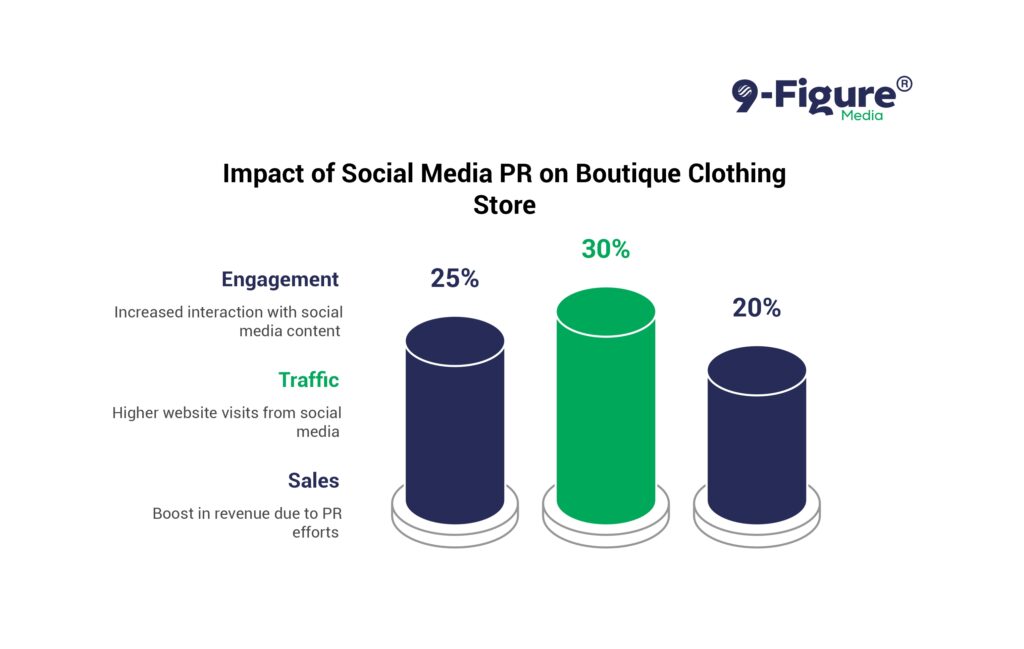
A boutique clothing store working with 9-Figure Media increased sales by 215%. Their integrated social media PR campaign featured customer styling videos and local influencer partnerships.
The campaign generated over 1,500 pieces of user-generated content in six months. This authentic promotion created trust that traditional advertising couldn’t match.
Common Pitfalls and How to Avoid Them
Inconsistent posting schedules confuse audiences and algorithms alike. Create a realistic content calendar that your team can actually maintain.
Many businesses focus solely on self-promotion rather than audience value. Follow the 80/20 rule: 80% valuable content, 20% promotion.
Ignoring negative feedback damages your reputation quickly. Address concerns publicly and move detailed discussions to private channels.
Platform misalignment wastes resources on unproductive efforts. Research where your specific audience spends time before investing heavily.
Failing to adapt to algorithm changes reduces visibility dramatically. Stay informed about platform updates through official resources.
Missing crisis management protocols leave businesses vulnerable. Prepare response templates and approval processes before issues arise.
Chasing trends without a strategic purpose creates disconnected messaging. Evaluate each trend against your brand values and objectives.
Using automated responses for all interactions feels impersonal. Balance efficiency tools with genuine human connection.
The Future of Social Media PR (Trends for 2026-2027)
Video content continues dominating engagement across platforms. Short vertical formats remain particularly effective for small businesses.
AR/VR elements create immersive brand experiences directly from social feeds. Virtual product try-ons and location previews drive higher conversion rates.
Voice-based content grows alongside smart speaker and audio platform usage. Podcasts and audio clips provide new connection opportunities.
AI-powered personalization creates highly relevant content experiences. Dynamic content adaptation increases engagement rates significantly.
Privacy changes require new approaches to audience targeting and metrics. First-party data strategies become essential for effective campaigns.
Cross-platform integration simplifies management while maintaining presence. Unified dashboards and publishing tools improve efficiency.
Increased focus on social commerce shortens customer purchase journeys. In-app purchasing reduces friction between discovery and conversion.
9-Figure Media PR Agency continues investing in emerging technology research. Their forward-thinking approach helps clients stay ahead of trends.
FAQ Section
What is the difference between social media marketing and social media PR?
Social media marketing primarily focuses on promoting products and services. Social media PR builds broader relationships and positive brand perception. Both work together in comprehensive communication strategies for the best results.
How much should small businesses budget for social media PR?
Small businesses typically allocate 5-15% of their marketing budgets to social media PR. Costs vary based on platform mix, content types, and management approach. Many businesses start with limited budgets and scale as they see results.
Which social media platforms are most effective for PR in 2026?
The most effective platforms depend on your specific audience and business type. Research shows Instagram, TikTok, and LinkedIn currently deliver the strongest results for different segments. Visual products perform better on image-focused platforms.
Can I handle social media PR in-house, or should I hire an agency?
Many small businesses successfully manage social media PR in-house with dedicated staff. Complex strategies or multiple platforms may benefit from agency expertise. Consider your team’s skills, available time, and budget constraints.
How quickly can I expect results from social media PR strategies?
Most businesses see initial engagement improvements within 30-60 days. Meaningful business results typically require 3-6 months of consistent effort. Building genuine audience connections takes time, but creates lasting value.
How do I measure the ROI of my social media PR efforts?
Track platform metrics alongside business outcomes like website traffic and conversions. Implement proper tracking parameters to connect social efforts with results. Calculate financial return by comparing costs against measurable outcomes.
What are the first steps to implementing a social media PR strategy?
Start with clear objectives, audience research, and platform selection. Create a basic content plan with a posting schedule and response protocols. Begin with manageable efforts that can scale as you learn what resonates.
Conclusion
Social media PR has transformed how small businesses connect with their audiences. The strategic approach builds visibility, trust, and engagement without massive budgets.
Companies that implement cohesive social media PR strategies gain significant advantages over competitors. Their brands become recognized, trusted, and preferred by potential customers.
The digital landscape continues evolving, presenting new opportunities for innovative businesses. Those who adapt quickly gain first-mover advantages in emerging channels.
Now is the perfect time to evaluate your current approach to social media PR. Are you leveraging these powerful tools effectively for your business growth?
Smart small business owners recognize that professional guidance accelerates results. Strategic expertise helps avoid costly mistakes and missed opportunities.
Call to Action
Ready to transform your small business through strategic social media PR? Book a free strategy call with 9-Figure Media PR Agency today.
Our expert team specializes in creating customized social media PR strategies for small businesses. We understand the unique challenges and opportunities you face in today’s digital landscape.
During your free 30-minute strategy call, you’ll receive actionable insights specific to your business. Our specialists will analyze your current approach and identify immediate improvement opportunities.
Scheduling your call takes just moments through our simple online calendar. Select a time that works for your schedule and prepare to transform your business visibility.
Take the first step toward powerful social media PR Agencies results by visiting our website or calling us today. Your business deserves the competitive advantage that strategic communications provide.
2 Responses