
Mastering media placements and learning how to get published in respected media outlets helps you to build credibility, authority, and trust in today’s competitive digital-first world, as against buying more ads.

Ambitious founders and entrepreneurs no longer consider mastering media placements optional; they view it as the difference between staying ignored and becoming a recognized thought leader.
Imagine this: you’re a startup founder with an innovative product, a passionate team, and a lean marketing budget.
One day, Forbes or Business Insider features your brand. As a result, website traffic surges, investor calls flood in, and potential partners finally take you seriously. That’s the power of knowing public relations for startups.
For startups and entrepreneurs, media placements provide the kind of third-party validation that no ad campaign can replicate. They send a strong message that your business is legitimate, innovative, and worthy of attention.
Importantly, whether it’s a mention in a top-tier outlet or a full feature in an industry magazine, these placements form the foundation of PR for startup brand visibility, a foundation that drives credibility, trust, and scalable growth.
Brands that prioritize learning how to get published early in their journey often leapfrog competitors who solely rely on ads.
At 9-Figure Media, we’ve seen this firsthand. With over 11 years of experience in digital PR, we’ve helped startups turn obscurity into visibility by engineering media placements that build lasting authority.
Media Placements for Startups: Ultimate Secret to Brand Success: Table of contents
- Understanding the Power of Media Placements
- The Hidden ROI of Media Placements
- Paid Media vs. Earned Media
- How to Get Published in Major Media Outlets
- Media Placement Strategies for Startups
- PR for Startup Brand Visibility
- Emotional Storytelling: The Heart of Media Placements
- Press Release Distribution for Startups
- How Startups Get Media Coverage: A Proven Blueprint
- Case Study: Startup Success through Media
- The ROI of Media Placements for Startups for Brand Building
- Choosing the Right PR Partner for Startups
- Building Long-Term Brand Authority
- Conclusion: Why Media Placements Are the Startup Growth Hack
Understanding the Power of Media Placements
For decades, brands relied heavily on paid ads to get attention, but today’s digital audiences are skeptical of advertising.
As a result, they seek third-party validation, credible mentions from trusted outlets.
This is where media placements change the game.
Media placements is the currency of trust in the age of information overload. You master how to get published by learning how to stand out as seen, heard, and remembered in the noise of today’s crowded marketplace.
In addition, unlike ads, editorial coverage feels organic.
Hence, when you get featured in a respected outlet, an independent journalist or editor recognizes your value, not just your brand claiming greatness.
Certainly, media placements build credibility far faster than traditional promotions.
- For instance, a 2025 survey found that four in five marketing leaders believe earned media is more effective than paid ads in driving engagement and trust.
- Likewise, consumers are 2.4x more likely to view editorial content favorably compared to sponsored posts.
- Similarly, in healthcare, for example, brands featured in Forbes see 40% higher audience retention compared to ad-driven campaigns.
Your story resonates more authentically when you understand brand building through PR. Backlinks from authority sites improve your SEO, and increased exposure compounds your brand visibility over time.

The Hidden ROI of Media Placements
The ROI of media placements often outperforms paid campaigns. Why? Because earned media lasts longer, spreads further, and builds deeper trust.
- Paid media: Include ads, sponsored posts. It delivers fast visibility, but audiences limit credibility since they know it’s paid.
- Earned media: When you get published in trusted outlets. It requires effort, but it transforms your brand with the long-term trust and authority it creates.
Studies show earned media can boost purchase intent, especially among skeptical millennials and Gen Z.
When respected journalists cover your brand, the endorsement creates ripple effects, user-generated content, organic shares, and social buzz, all multiplying reach without paying extra.
That’s why startups that prioritize media placements often spend less on ads while seeing better long-term outcomes.
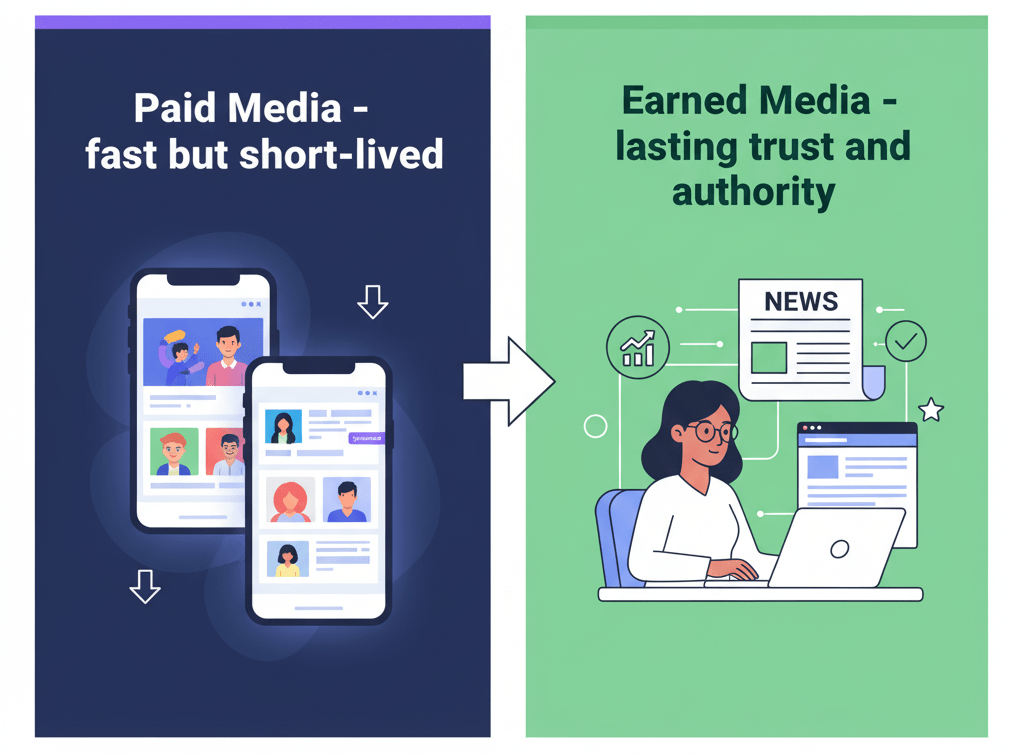
Paid Media vs. Earned Media
Paid Media
- Ads, sponsored posts, influencer partnerships.
- Fast results but short-lived.
- Audiences see it as transactional.
Earned Media
- Editorial features in news outlets, industry magazines, or blogs.
- Requires persistence and PR effort.
- Builds lasting trust and credibility.
A recent Nielsen study found 92% of consumers trust earned media more than any other form of advertising. For startups, that trust doesn’t just attract customers, it also attracts investors, partners, and top talent.
A biotech startup featured in The Wall Street Journal after announcing breakthrough clinical results saw a 300% spike
in investor inquiries within a week, without spending a cent on ads.
That’s the halo effect of editorial credibility.
For founders, this means shifting mindset: stop thinking of PR as a luxury and start treating media placements as a core growth strategy.
Related: Why Your Brand Needs a Strong Media Strategy Now
How to Get Published in Major Media Outlets
So, how exactly do startups get featured? Approach the process strategically and follow its surprisingly structured path. Here’s a step-by-step roadmap:
1. Research Relevant Publications
Not every outlet is right for your story. Start by identifying where your audience spends time. Tech startups might target TechCrunch or Wired. Lifestyle brands might aim for Vogue or Entrepreneur, or general platforms like Forbes for broad appeal.
Analyze where your competitors get featured, study the journalists writing those stories, and tailor your pitch accordingly.
2. Craft a Newsworthy Story Angle
Journalists don’t want ads; they want stories. Position your brand within current trends, customer challenges, or cultural shifts. For example, if your startup addresses remote work, tie your story to the broader hybrid-work conversation.
Use emotional storytelling: share founder struggles, customer wins, or unique data insights. That’s how you get published in ways that resonate.
3. Build Relationships with Journalists
Networking is essential. Follow journalists on X (Twitter), comment on their work, and engage authentically before pitching.
Use HARO (Help a Reporter Out) to respond to journalist requests. Warm relationships increase the odds of being published.
4. Use Press Releases Strategically
Press release distribution for startups is still powerful when done well. Keep it concise, include data, and distribute via PR Newswire or niche outlets. Pair this with personal journalist follow-ups.
5. Work with a PR Agency
If Do-It-Yourself PR feels overwhelming, consider the best PR agency for media placements.
Agencies like 9-Figure Media help startups get PR and published in top-tier outlets by leveraging established journalist relationships and data-driven strategies.
Media Placement Strategies for Startups
For startups, mastering the right media placement strategies is the bridge between being unknown and becoming an authority.
Every founder wants to get featured, but your approach makes the difference.
Think of media as an ecosystem. Each outlet, whether it’s a global news platform or a niche industry blog, has its own audience, editorial style, and expectations.
If you want your brand to succeed with media placements, you must tailor your approach instead of sending out cookie-cutter press releases.
Here are three proven strategies:
- Story-First Pitches
Don’t lead with your product, lead with your story. Journalists respond to human narratives, struggles, and solutions.
Sharing how your startup overcame challenges or disrupted outdated systems increases your chance to build your brand.
- Leverage Data and Trends
Reporters love data. Conduct surveys, share customer insights, or reveal industry shifts.
When your pitch includes exclusive numbers, journalists see it as a valuable resource. That’s how media placements stand out.
- Consistency over One-Off Wins
Getting published once is good. But consistent mentions build compounding authority.
A steady cadence of features in trade publications, guest columns, and thought leadership pieces creates credibility that no competitor can easily replicate.
Brand building through PR requires more than a single press release; it is building a narrative arc that evolves over time.
PR for Startup Brand Visibility
Media placements are about visibility that translates into measurable growth. For startups, PR is crucial for establishing brand visibility and breaking out of obscurity.
- Investors take you more seriously when they see your brand covered in respected outlets.
- Customers trust you faster when your name appears in familiar media brands.
- Employees and partners view your startup as a safer bet when external validation exists.
When startups engage earned media strategies, they earn exposure and build the foundation of authority
This visibility creates a trust loop: the more you appear in credible outlets, the more people trust your brand, and the easier it becomes to secure more media placements.
For example:
- A health-tech founder who focused on consistent media placements grew from a LinkedIn following of 5000 to 15,000, simply by leveraging journalist features.
This is not an isolated win; they’re repeatable outcomes when startups commit to strategic PR.
Emotional Storytelling: The Heart of Media Placements
At the core of every great media placement is a story that resonates. People connect with stories, not sales pitches.
To get published, remember:
- Journalists want stories that inspire, inform, or challenge the status quo.
- Readers want to see themselves in your journey, your struggles, your breakthroughs, and your mission.
For startups, this means vulnerability is power. Don’t just pitch your latest product feature. Share why you built it. Share the late nights, the setbacks, and the “aha” moments. That’s what makes media placements authentic.
Example: When a female founder shared her battle with burnout while building her health-tech company, her op-ed in The Guardian went viral. The piece wasn’t about her product, but her story, yet it drove thousands of new signups because readers connected with her journey.
This is the difference between shallow mentions and impactful features. If you want to get published in top outlets, tell stories that make readers feel something.
Related: 12 Powerful Ways to Use Brand Storytelling to Drive Conversions
Press Release Distribution for Startups
Press releases still matter, but only when used strategically. In fact, press release distribution for startups is one of the most underutilized yet powerful tools for building visibility.
Here’s how to do it right:
- Keep it concise: Journalists receive hundreds of emails daily. A 300 to 400-word release gets read.
- Add news value: Launches, partnerships, funding rounds, or social impact initiatives all qualify.
- Distribute smartly: Don’t just use wire services. Directly email targeted journalists who cover your niche.
- Follow up: A personalized note after distribution increases your chance to get media coverage.
When paired with other PR techniques, press releases amplify visibility.
For example, a startup recently raised seed funding with a distributed press release, which garnered coverage in both niche fintech blogs and mainstream outlets, proving that media placements can start with a well-executed release.
How Startups Get Media Coverage: A Proven Blueprint
The blueprint looks like this:
- Identify Your Angle –What makes your startup different? Why now?
- Build Media Lists – Research the right journalists, not just the right outlets.
- Craft Tailored Pitches – One-size-fits-all emails rarely work. Customize for each journalist.
- Leverage Timing – Tie your pitch to seasonal trends, cultural conversations, or breaking news.
- Measure Results – Track not just mentions, but leads, traffic, and conversions.
This is how media placements turn into lasting brand equity. By treating PR as a system instead of a gamble, you remove luck from the equation.
Case Study: Startup Success through Media
NatureBox, a healthy snack subscription startup founded in 2012, while struggling in a competitive market, partnered with a PR agency specializing in media placements.
They started off with audience research: identifying customer archetypes like gamers and tech enthusiasts through social media analysis. They donated products to hackathons,
building grassroots buzz.
A breakthrough came with Kotaku and Lifehacker. The result? They managed to publish in The New York Times, driving massive traffic.
They won over 1,600 new customers in four months from earned placements with no ad expenditure required. Visibility surged, with social media following growth and inbound inquiries multiplying.
This case highlights that when you combine research, compelling angles, and persistence with smart PR tactics, media placements will drive both visibility and revenue.
The ROI of Media Placements for Startups for Brand Building
Measuring the ROI of media placements relies on concrete metrics that drive brand building, even if it seems intangible.
Media placements for startups are investments yielding traffic, leads, and conversions.
Media placements pay dividends in multiple ways:
1. Traffic & Leads: A single feature can boost traffic by 200-500% when you publish,
Leads follow suit; earned coverage often converts at higher rates due to built-in trust.
2. Conversion rates: Coverage in high-authority publications can drive targeted, high-intent visitors to your site.
3. SEO Boost: Media mentions from high-authority sites improve domain
authority, elevating organic brand searches. Optimized press releases further
amplify this, making your brand discoverable when it matters the most.
Also, backlinks from reputable outlets improve search rankings.
4. Investor Confidence: Media placements for startups enhance investor relations and stakeholder confidence. A strong media presence signals viability, attracting funding and partnerships.

Choosing the Right PR Partner for Startups
One of the most overlooked factors in successful PR is partnership. Startups often ask: Do we really need a PR agency, or can we manage media outreach in-house?
Moreover, most founders are already stretched in managing products, fundraising, and operations, while they think of handling PR themselves.
To publish consistently, partnering with the best PR agency for media placements is important.
Here’s what to look for in a partner:
- Startup-Specific Expertise: Many agencies focus on big corporations. If you’re early-stage, find a PR agency for small businesses that understands lean budgets and rapid pivots.
- Media Relationships: The best agencies don’t just send press releases—they know journalists personally, making it easier to secure media placements for startups.
- Proven Track Record: Ask for case studies that show how they helped other startups publish in top magazines or major outlets.
- Transparent Pricing: Beware of agencies that overpromise vague exposure. Look for clear deliverables tied to visibility, coverage, and impact.
Therefore, choosing wisely can save months of trial and error, ensuring your efforts actually translate into credibility.
Building Long-Term Brand Authority
To establish lasting authority:
- Mix Placements: Secure a blend of niche industry features, lifestyle media, and high-profile business publications.
- Create a Content Calendar: Treat PR like marketing. Plan quarterly story angles aligned with launches or milestones.
- Track ROI: Use analytics to measure which outlets drive the most leads or conversions. This ensures future media placements for startups are more targeted.
- Invest in Thought Leadership: Write opinion pieces, appear on podcasts, and speak at events to supplement your media features.
Media mentions are not just about exposure; they are about credibility that compounds over time.
Conclusion: Why Media Placements Are the Startup Growth Hack
For entrepreneurs, brand building through PR goes beyond bragging rights; it multiplies growth. Each article, feature, or press release serves as a building block of credibility, visibility, and authority.
By mastering media placements, founders can:
- Build investor confidence
- Accelerate customer trust
- Stand out in saturated markets
But the real secret is this: media placements are not luck. They are the result of intentional strategies, smart partnerships, and relentless storytelling.
And if you’re looking for the best PR agency for media placements, few compare to the track record of 9-Figure Media. With 11+ years of expertise and a proven system for securing top-tier visibility, they help startups and entrepreneurs consistently publish in outlets that drive real growth.
